Agricultural Education
College of Agricultural, Human, and Natural Resource Sciences
- Offered as:
- Major
- Certificate
Overview
Combining the best of both agriculture and teaching, the agricultural education major prepares students to educate the next generation of agricultural leaders and consumers.
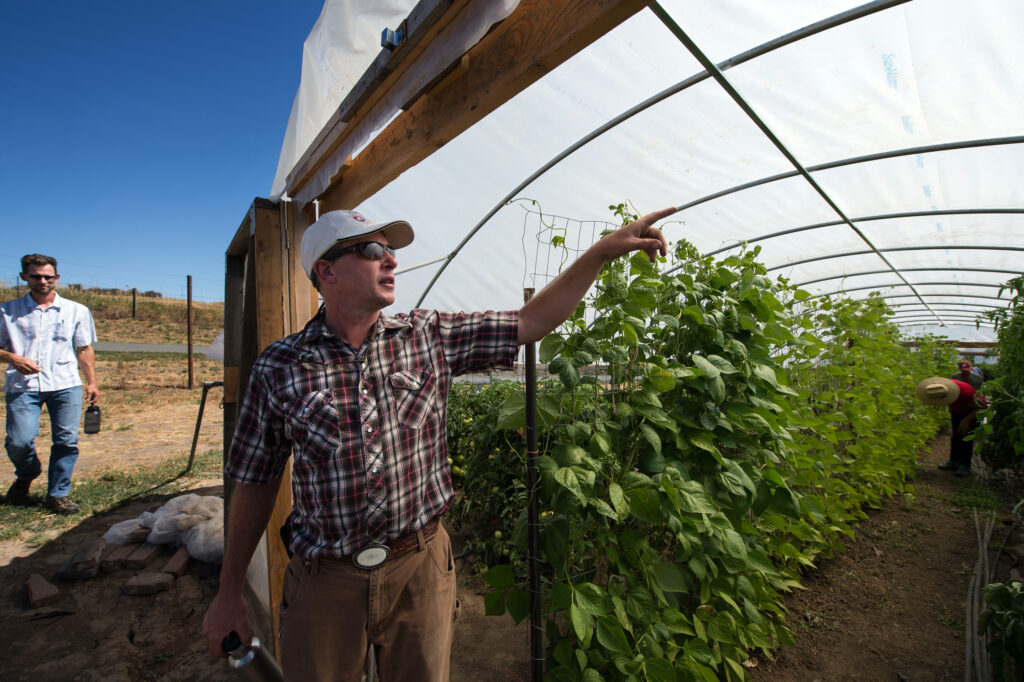
Highly sought after by employers, agricultural education graduates teach high school and middle school agricultural science classes, as well as serve as FFA advisors, adult education instructors, community outreach coordinators, university extension agents, etc.
[+] Strengths of the program
- Participate in continuing professional development opportunities after receiving a degree or starting a career.
- The agriculture education program enhances communication and leadership skills for careers throughout agricultural education.
- Learn to develop curriculum and instructional materials for agricultural students.
- Benefit from the career and learning networks provided by agriculture, food, and natural resource educators.
- Engage in research and scholarly activities related to teaching, communication, distance delivery, and leadership in agriculture, food, and natural resources.
- Prepare for a successful career as an agricultural educator in secondary and postsecondary schools, as well as for agriculture, food, and natural resources industries.
[+] Teaching endorsement and study options
Teaching Endorsement
Teacher certification is an integral part of the agricultural education major. Graduates who wish to teach are eligible for a Washington state teaching endorsement, and are qualified to teach at the secondary-school level.
Study Options
Students in agricultural education can specialize in:
- Horticulture
- Soil science
- Crop science
- Animal science
- Agricultural & natural resource economics
- Agricultural technology and management
- Food science and human nutrition
- Natural resource science
- Career and technical education
[+] Signature courses & program information
Agricultural education is a science-based program that includes chemistry, biology, communication, and math classes, as well as a teacher education component that results in certification to teach agriculture.
The major includes technical agriculture courses in animal science; crops and soils; horticulture; and agricultural and resource economics.
Featured courses
- Cultivated Plants
- Agriculture, Environment, and Community
- General Ecology or Natural Resource Ecology
- Soil: A Living System
- Methods of Teaching Agriculture
- Cultural and Community Contexts
- Metal Fabrication
- Methods, Materials, and Machines for Teaching Ag. Mechanics
- Intro to Farm and Ranch Management or Intro to Ag Marketing
- Program Planning in Agricultural Education
- Methods of Teaching Agriculture
- Directed Teaching
- Principles of Career and Technical Education
Joining the program
To be eligible for the teacher education program (usually certified during the sophomore year), students need to meet the following requirements:
- Have 80 hours of recent educational experience with children or youth
- Complete at least 45 semester hours of course work
- Complete all the prerequisite courses with a C grade or better
- Complete the program application
- Have a personal interview
- Pass the WEST-B test
- Earn a minimum cumulative GPA of 2.5 at Washington State University
See the teacher education program website for full information about teaching certification requirements, including more about prerequisite courses and the state's WEST-B test.
Note: See the WSU Catalog for degree requirements and talk with your academic advisor about planning and scheduling your courses. All students must meet requirements as outlined in the catalog in order to graduate.
[+] Scholarships & financial aid
A variety of state, federal, and university-sponsored programs are available to help students with educational costs. Washington State University awards millions of dollars in financial aid and scholarships to thousands of students every year based on financial need, academic merit, or a combination of the two.
For agricultural education majors
The College of Agricultural, Human, and Natural Resource Sciences awards roughly $600,000 to students annually. For more information, see the College of Agricultural, Human, and Natural Resource Sciences scholarships page.
For all students at WSU
To be considered for scholarships and financial aid from WSU, you'll need to:
- Complete the WSU general scholarship application — all students need to do this to be considered for scholarships from the University.
- Fill out the FAFSA to see if you're eligible for aid based on financial need (optional, but highly recommended).
See the Scholarships and Finances section of the WSU admissions website for deadlines, departmental scholarships, application instructions, and general information.
[+] Careers in agriculture education
More than 75 percent of the program’s graduates choose to teach the applied science of agriculture. There are many opportunities in Washington and nearby states to teach agriculture. Some agricultural education majors increase their employment options by also taking courses that lead to certification to teach science.
There are also a variety of non-teaching career areas that require the skills learned in the agricultural education program. Some of those non-teaching options include:
- 4-H Youth or agricultural extension agent
- Administrator of industry-based training/information programs
- Administrator of public relations programs
- Sales and service
- Government agencies, such as SCS, ASCS, and FmHA
- Public service organizations, such as Farm Bureau or livestock/crop commodity boards
- Peace Corps, agricultural missionary, or similar work with other international agencies.
[+] Campus organizations and activities
The WSU Agricultural Education Club and Collegiate FFA is open to all students in agriculture-related majors. It offers an excellent opportunity to meet people with similar interests; not only is it fun, the advisor can help you stay on track for graduation.
The club participates in many activities, often in partnership with the nearby University of Idaho Ag Ed Club, every month. Club activities include volunteer work, ice skating, meetings, BBQs, FFA competitions judging, potlucks, helping with the state FFA convention (which is held each summer at WSU), and anything else suggested by members.